Tuesday, November 24, 2015

How Dental Veneers Restore Damaged Teeth

Dental VeneersEsthetically dental veneers can fix damaged and stained teeth, providing you with a perfect solution that gives you back a beautiful white smile. Dental veneers are so close to the original teeth that once you have had them placed, you will forget which teeth have been augmented using the porcelain veneers. They look, feel, and act exactly like your original teeth. To do this the thin strips of porcelain, which the dental veneers consist of, have to take on some of the qualities of the naturally occurring enamel. They look exactly the same and are shade matched so that they are a match for the surrounding teeth. They also have the same hardiness. Enamel is the bodies hardest substance to withstand the rigors of chewing and biting, in a normal dietary routine. The veneers are also extremely hard to perform these same functions. On the flip side, both veneers and enamel, can be damaged if you engage in activities that put the teeth at risk for breaking, chipping, or cracking.

For damaged teeth, dental veneers provide protection, augmenting the teeth so that the damage cannot spread further. When a tooth has been cracked, broken, or chipped, there is always the potential that the damage could continue to spread as pressure is put on the tooth. This pressure comes in the form of regular activities like biting and cannot be avoided. Using a dental veneer we can repair the damage, and the veneer will provide strength to the tooth that in turn prevents the damage from spreading. Similarly when a tooth is damaged there is always the potential that bacteria could make its way past the protective barrier of the enamel and into the inner part of the tooth, spreading an infection. The dental veneers prevent this from happening by effectively sealing the tooth in much the same way as the original enamel did.

Properly taken care of dental veneers can have a long lifespan. There are not definite answers as to just how long, based on the fact that the mouth changes and each individual has a unique set of circumstances. What we do know is that veneers typically will last between seven and thirty years and that how a person maintains their mouth has a lot to do with the longevity of them. Unforeseen occurrences like accidents can cause damage, as can gum diseases and other dental emergencies. However, as long as you maintain a good oral health routine, chances are that they will last well into old age.

Some of our patients wonder how, or if, they will need to alter their routine after having a veneer replacement. The simple answer to this question is no. Veneers require no extra maintenance than your natural teeth, which includes brushing twice per day, flossing regularly, and scheduling professional cleanings with us at least twice in the year. Other than this the only thing we suggest is to avoid the overuse of products that might stain your natural teeth. Since the dental veneer doesn't stain, you do not want to overly stain the teeth around it and make things look uneven.

  >  

Monday, November 2, 2015

An Invisalign® Dentist Has Solutions For You and Your Teen

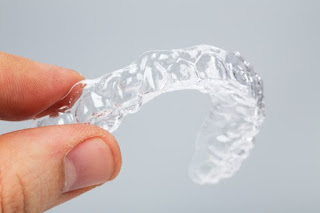
Invisalign DentistAs an Invisalign® dentist, we are seeing a greater interest in young adults and teens for this alternative means of straightening teeth. Invisalign® has two distinct qualities that make it immensely popular among adults. They are extremely convenient to use, and they are very discrete. The inconspicuous nature of these tooth straightening devices have made them a favorite among adults who want to straighten their teeth without having the slightly embarrassing look that comes from wearing traditional braces. For adults, it is almost revolutionary that they have a discrete path to straighter more beautiful teeth. Sadly, a lot of parents have not made the same leap when it comes to planning a treatment for their teenagers.  They are among the largest group that use braces; they are also a group that depends on their parents to make medical choices for them. As such, there is certainly a strong case to be made for selecting Invisalign® for teenagers.

The makers of Invisalign® have come out with a new product designed specifically with a teenage audience in mind. Similar to adults, teenagers have a lot of peer pressure and the desire to hide their treatment, as they straighten their teeth, is very important to teenagers. When you consider the habits of most teenagers, the food that they prefer to eat, the importance looks play in their social structure, and their busy schedules it becomes clear that parents should be considering Invisalign® Teen as an option for their growing child. It is a stellar alternative to the traditional metal braces.

There are natural advantages to working with Invisalign®, however, some patients have concerns about the effectiveness, and so it is important to note that this product works on exactly the same principle as traditional braces. Traditional braces work to move teeth into a proper alignment by exerting pressure on them. This is achieved using connected brackets, screws, and rubber bands. With Invisalign® the same effect is evident by using a series of progressive aligners, essentially putting a similar amount of pressure on the teeth to make them move. The difference is that with the new technology, this can be achieved without you or your teenager having to have a mouth full of metal and constantly having to visit our office for adjustments.  As an Invisalign® dentist, we find that the conveniences of this solution cannot be understated.

One of the biggest complaints teenagers have against traditional braces, other than the fact that it hampers their looks, is the fact that it comes with a laundry list of foods that can no longer be eaten. Since braces are permanently affixed to the mouth, they have to be protected from damage. As a result your child will not be able to eat anything that is too sticky, too sweet, too sour, or too hard for fear that any of these may damage the wires or brackets in the braces. With Invisalign® there are no such restrictions. The aligners are fully removable and are supposed to be taken out to eat meals. Once you are done eating, rinse out your mouth to clean your teeth, then put the aligners back in.  As an Invisalign® dentist, we can go over all of the benefits with you during a consultation.

  >  

Tuesday, October 27, 2015

The Various Types of Dental Crowns

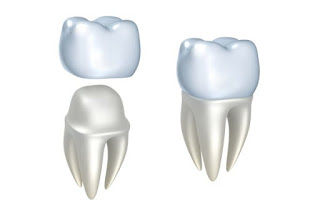
CrownsDental crowns are used to repair a number of different issues with teeth, providing a strong and stable solution that can greatly extend the life of your teeth. When it comes to dental crowns, you have a great deal more choices than you did a few years ago. While we have been working diligently to improve dental crowns, this has created a situation where you have to select between a variety of options. Some people swear by the full porcelain crowns, however, we have learned that when it comes to dental crowns there is no one size fits all solution, meaning you may actually not be the best fit for them. What is challenging is that so few people really understand the differences between the types of crown materials used, or the pros and cons of each of them. We can explain to you what the best kind of material for your mouth is and why during your appointment.

Porcelain dental crowns were, and still are, the best material to use when it comes to an aesthetic point of view. Porcelain looks and feels almost exactly like enamel, which means that once a dental crown is placed, the tooth is almost identical to the natural teeth. There are some other advantages to using porcelain to make dental crowns. For example, porcelain is a poor conductor of heat, which means that your teeth will experience far less sensitivity to cold and hot substances in the immediate aftermath of placing the crowns. Porcelain is extremely hard, making it very durable. This, however, also creates a disadvantage in some situations. The hardness of porcelain can cause it to wear down the opposing teeth. The other disadvantage to porcelain dental crowns is that porcelain tends to be more fragile and if mistreated can crack.

Gold has been used to created dental crowns for a very long time. For a while, gold dental crowns were the standard to which everyone aspired. Gold, like porcelain, has both advantages and disadvantages when used to create dental crowns. Some of the advantages are that gold can be attached, or bonded, to the teeth using a glass ionomer. This is advantageous because fewer people have a sensitive reaction to the glass ionomer bonding than do the more comprehensive bonding techniques used when placing porcelain crowns. In addition to this, gold is very durable, which means your crowns will last a long time. To make gold more durable, the crowns are made of an alloy which includes other metal like titanium, palladium, and silver to make the gold harder since in its purest state gold is extremely soft. Gold dental crowns also put less pressure on the opposing teeth, meaning they will cause less wear. As far as disadvantages go, the most obvious is the fact that gold is not the color of teeth and cannot be used to repair front or prominently visible teeth. In addition to this gold is a good conductor of heat, which can increase a patient's sensitivity to hot and cold substances immediately after the procedure. For these reasons, most of our patients select a tooth-colored dental crown but we can discuss both options with you during an appointment.

  >  

Monday, October 12, 2015

Dental Implants vs. Dental Bridges

Dental ImplantsWe can provide you with dental implants or dental bridges to replace your missing teeth. While we provide preventative dental care to help reduce the risk of tooth loss, this is still an issue that many adults deal with on some level. If you have lost a tooth due to age, infection, or an accident, we recommend you take the time to consider all your options. As a cosmetic dentist, there are many ways to replace missing teeth, and it is important to select the option that is right for you. The best way to find out is to schedule a consultation. In the meantime, here is what you need to know:

Dental implants. The most secure and natural-looking solution for tooth loss is dental implants. Unlike a bridge that requires other natural teeth, implants are surgically placed beneath the gums and secured to the jawbone. As a result, no other teeth are required or impacted by the procedure. The new tooth is simultaneously more secure because of the process of osseointegration. This is where the titanium post and jawbone fuse together to create a new root system that will support your new tooth. This makes it possible to eat all your favorite foods and engage in normal activities without restriction. The only drawback to this when compared with a bridge is that since it is surgical, you can expect a longer recovery time. Simultaneously, osseointegration, while important, takes a few months to complete.

Dental bridges. If you want a solution that is more secure and durable than dentures, dental bridges is a good option. A bridge is used for partial tooth loss when there are natural teeth that are strong enough to support it. To complete the procedure, we make an impression of your mouth and take measurements so the dental lab can make your bridge. To secure it in place, a crown will be placed on the two teeth surrounding your missing one, and these crowns will serve as anchors to secure the bridge. As a result, you will have a semi-permanent tooth replacement that looks natural and functions like a natural tooth.

If you are interested in either dental implants or dental bridges, we are an ideal dentist office to visit. As a cosmetic dentist, we can provide you with both solutions and complete the procedure in a way that restores the form and function of your smile. Both of these solutions will look like natural teeth when we are done. This is not always the case with a dental bridge, so it is important to visit a cosmetic dentist who has the skill to create high-quality prosthetics. Both options will also allow you to eat your favorite foods, etc. The main difference is that implants not only replace your teeth, they improve the health of your jawbone by providing it with much-needed stimulation. To learn more, schedule an appointment.

  >  

Monday, September 21, 2015

Teeth Whitening- The Most Affordable and Effective Cosmetic Improvement


teeth-whitening
If you are looking for an economical and successful way to improve your smile, teeth whitening is the best option for you. Teeth whitening is an incredibly popular cosmetic dental improvement with Americans spending nearly $1.5 billion a year on teeth whitening products and services. So many people whiten their teeth because they know it is a cost-effective way to attain a more professional and attractive appearance without having to make drastic changes to their smile. 80% of Americans between the ages of 18 and 49 desire whiter teeth because it is the most affordable and effective solution for a better smile.

How is teeth whitening effective?
The majority of teeth whitening products use a form of peroxide to whiten teeth through oxidation. Peroxide can reach the inner part of the enamel within a few minutes for a fast route to whitening. The oxidation process affects the organic compounds within your enamel that produce color. The peroxide solution will provide a route to a colorless enamel that represents itself as whiter teeth. With store bought products, you will get some of the peroxide agents, but they are not as effective as teeth whitening kits from a dentist office. Office teeth whitening products provide more than one peroxide whitening compound or stronger levels of it so your teeth are whitened faster and the results are more dramatic, leading to a more effective teeth whitening process for an affordable price.

Is teeth whitening better after dental cleaning?
Yes. When you use store bought products, the whitening process is often hindered by the plaque on your teeth. When you visit our office for teeth whitening, we will first provide you with a deep teeth cleaning that will naturally whiten your teeth by removing surface stains. After the cleaning, we can perform teeth whitening services that result in even more effective results.

Why are my teeth stained?
Teeth become stained for many reasons, most commonly due to everyday use. Eating and drinking staining foods and drinks can lead to darker or yellowed teeth. Try to avoid coffee, tea, wine, soda, dark fruits and veggies, and bright or dark colored candies unless you plan to rinse your mouth out or brush your teeth right after you consume the items. Smoking and age are also contributors to stained teeth. Medication and hereditary factors can discolor teeth, but are hard to avoid. Teeth whitening from our office can combat the staining that is caused by all of these factors.

After I get teeth whitening will my teeth be white forever?
Unfortunately, teeth whitening does not produce permanent results since you use your teeth every day so they are constantly exposed to staining items. A proper teeth whitening should last a few months. Despite the fact that it isn't permanent, it is so affordable that many people just come right back in for more teeth whitening when they feel their teeth are becoming dull again. We can also provide quick touch-ups as well.

Contact us to learn more about why teeth whitening is the most affordable and one of the most effective cosmetic dental improvements. We can provide you with the teeth whitening you need and help you determine what shade is best for you.


  >  

Wednesday, September 2, 2015

Dental Bonding: A Fast and Easy Restorative Solution

Dental Bonding

As a cosmetic dentist, we realize many people have not heard of dental bonding. It is more common to discuss restorative solutions like dental crowns or dental veneers. Still, bonding is one of the most affordable, convenient, and fast restorations you can get. If you have cracked or chipped a tooth, this is one way to restore it in a single visit to our dental office. For people on a time crunch or being budget-conscious, this is an excellent solution to consider.

Here is how it works:
The process of dental bonding is fairly simplistic, but it takes the skilled hand of a cosmetic dentist to ensure it looks natural once done. Most dental restorations (crowns and veneers, for example) are created in a dental lab by a skilled technician. The lab tech creates these restorations using measurements and an impression made of your mouth. They have time to craft a restoration the exact size and shape it is supposed to be and make any adjustments if necessary. The bonding process works without the help of a dental lab, and the dentist is the one who shapes the material in-office. This makes it important to select a dentist who performs this procedure regularly and can do it well.
When you come in for dental bonding, your tooth will be cleaned and then slightly roughened. Your enamel will remain in place, so this is a non-invasive treatment. After it has been roughened, a moisturizing solution will be applied. Next, the dental bonding material will be placed onto your tooth, and the dentist will shape it in place. It will be shaped to give you a beautifully shaped tooth that looks entirely natural. Once done, the material will be hardened using a special dental light. It will also be created in a shade that matches your natural teeth to further ensure it blends in. The process can be completed fairly quickly, in less than an hour per tooth. As a result, you can come in for a restoration and leave with a completed one that same day.

What dental bonding can do for you:
Since bonding material can be shaped in place, it is incredibly versatile and also strong. It can restore the structure of your tooth if the tooth becomes cracked or chipped. It can also be used to cover dark stains when a teeth whitening treatment is not enough to remove them. As a cosmetic dentist, we even use bonding material to close small gaps in between the teeth. This means you can benefit from a drastic improvement to your smile, without needing to wear braces for months or going through a lengthy cosmetic treatment process. We can even use bonding material as a way to change the shape or size of your teeth in combination with contouring. Given the versatility and convenience of dental bonding, we highly recommend it as a treatment solution. To learn more, call and schedule an appointment.


  >  

Friday, August 28, 2015

Dermal Fillers in Chicago Can Complete Your Smile Makeover


Dermal Fillers in Chicago
Dermal fillers in Chicago can provide you with a complete smile makeover. If you have had cosmetic dental improvements done before, but still feel as though something isn't right, a dermal filler can help. Dermal fillers also referred to as dermal fillers, provide the extra touch-up you need for your best smile ever.

Smile Improvement: When your teeth look great, but your smile still sags, it can detract from the attractive appearance of your teeth. Today, we provide a range of dermal fillers in Chicago that can improve the structure of your smile. If you feel as though your skin sags or you have thin lips, creases in your cheeks, or wrinkles by your eyes or on your forehead that take away from your beautiful smile, our fillers can help today. If you have recently had work done to improve your teeth, don't let the skin on your face take away attention from improvements you have invested time and money into.
There are several advantages to using our dermal fillers in combination with a smile makeover:
Quick Application: Our dermal fillers in Chicago can be performed in one visit. We will apply the filler to the areas requested through an injection that will instantly create an improvement. You can even have your filler injected during your lunch break.

Minimally Invasive: All that is required in order to improve your smile is a quick dermal filler visit. As mentioned above, one visit is all it takes. Following the dermal fillers treatment, you can leave the appointment with no recovery or healing time necessary. Some dermal fillers begin working immediately while others require a few weeks to take on their full effect.

Minimal Side Effects: The most prevalent side effect is slight swelling at the injection site. You may also notice a little redness. In some cases, bruising may occur. Bruising is most commonly experience in areas of thinner skin, like the forehead. Any bruising that occurs will only last for two to five days in most cases. The rarest side effects are itching, rash, and the development of small lumps. Our patients rarely complain of these issues.

Longevity: The development of dermal fillers in Chicago over the years has led to a longer period of improvement. Dermal fillers are not considered a permanent improvement, but our fillers can create an enhancement that lasts for many years. In rare cases, improvements only remain for six months.

Dermal fillers in Chicago are a safe and effective way to improve the look of your smile. Compared to more complex forms of cosmetic surgery like traditional facelifts, dermal fillers are non-invasive and provide competitive results. Why spend more money and more recovery time on a facelift that may or may not work when you can receive tried and true results from dermal fillers in Chicago? Don't let those wrinkles or that saggy skin detracts from your beautiful and straight smile. Visit us for more information about the process and whether or not it is right for you today.


  >